We use cookies to optimize patient experience. By continuing, you agree to our Privacy Policy.

● ACCEPTING NEW PATIENTS FOR 2025 SEASON

Stop Playing Through The Pain.
Recover Like a Pro.

Pickleball is high-impact. Your joints need more than ice.
Discover the clinically-backed protocols to extend your court life.

Treat by Indication

Select a region to identify specific pathology protocols.

Knee Complex

Patellar Tendonitis & Meniscus

Elbow / Wrist

Lateral Epicondylitis

Lumbar Spine

Sciatica & Stiffness

Foot & Ankle

Plantar Fasciitis

Clinical Evidence

Mechanism of Action

We do not rely on pseudoscience. Every recommendation in our formulary is validated by biological mechanics.

Mitochondrial Activation

Modality: Red Light Therapy

Specific wavelengths (660nm & 850nm) penetrate the dermis to stimulate the mitochondria in muscle cells. This increases ATP production, effectively "recharging" the cellular battery to accelerate tissue repair by up to 200%.

Lymphatic Flush

Modality: Pneumatic Compression

Dynamic air compression mimics the muscle pump of the legs, mechanically moving metabolic waste (lactate and inflammation) out of the limbs and back to the heart for filtration. Reduces edema immediately.

Gate Control Theory

Modality: Percussive Therapy

High-frequency mechanical pulses (40 per second) distract the brain's pain receptors. This neurological override reduces perceived pain while simultaneously increasing blood flow to the treated fascia.

Case Study: 001

The "Low-Impact" Lie

Why Pickleball is Actually an ER Waiting Room

Subtitle: We need to stop pretending this sport is "gentle" before 69% of us end up in a cast. If one more person describes pickleball as a "low-impact activity perfect for seniors," I am going to scream—assuming I haven’t already torn a vocal cord trying to return a lob. The marketing of pickleball as a gentle, social pastime is brilliant, but according to the latest nationwide data, it is statistically misleading. We aren't playing a game; we are engaging in a mass casualty event with plastic balls.

The 69% Reality Check

Recent epidemiological studies reveal a staggering statistic: 68.5% of active pickleball players report suffering an injury in the past year. Let that sink in. If nearly 7 out of 10 people participating in a "leisure activity" get hurt annually, we need to rebrand it. This isn't just about sore muscles; we are seeing a massive spike in serious medical events. Emergency room visits for pickleball injuries have skyrocketed, with a 22-fold increase recorded between 2013 and 2022.

The Gender Divide in Carnage

The injury data reveals a brutal biological divide. If you are a woman over 65, the court is essentially a fracture factory. Females account for 69.1% of all fractures, with the wrist being the number one victim. The mechanism is almost always a fall—tripping over your own feet while backpedaling for a lob you had no business chasing. Meanwhile, men are tearing themselves apart in a different way. Male players are significantly more likely to suffer strains and sprains, particularly in the lower leg and calf, often due to sudden acceleration.

From Recess to Rehab

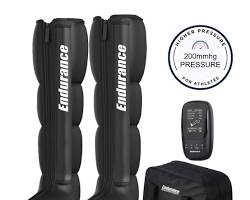
The sport has forced us to medicalize our leisure time. We are no longer just "cooling down"; we are entering sci-fi recovery protocols. Players are now strapping on Intermittent Pneumatic Compression (IPC) boots to squeeze the swelling out of their legs because research shows it reduces the soreness that peaks 48 hours post-match. Others are turning to Photobiomodulation (Red Light Therapy), blasting their quadriceps with LEDs to stimulate mitochondrial ATP synthesis just to survive a Tuesday night league.

The Verdict

Pickleball is incredibly fun, but it is not "safe" by default. It is a sport of sudden stops, twists, and lunges played on hard concrete. Until we treat it like an athletic endeavor requiring neuromuscular warm-ups and fall-prevention training, the only thing growing faster than the sport will be the waiting list at your local orthopedic surgeon’s office.
Clinical Advisory

Your Knees Are Screaming Because Your Recovery Game Is Weak

Why playing pickleball without a recovery budget is basically self-sabotage.

Let’s be honest: we all lied to ourselves. We saw the smaller court, the plastic ball, and the retirees high-fiving, and we thought, “This is easy. This is low-impact.” We were wrong. According to nationwide data, nearly 69% of us will end up with some form of injury this year. If you are playing three times a week or more, your odds of getting hurt jump by 45%. The problem isn’t the game; it’s your refusal to treat your body like the depreciating asset it is. We are out here sprinting on concrete with the joint cartilage of a Honda Civic that’s missed three oil changes.

The "48-Hour" Hangover

You feel fine immediately after the game. Maybe a little tight. But wait for it. Research shows that Delayed Onset Muscle Soreness (DOMS) hits its sadistic peak 48 hours post-match. That waddle you’re doing on Tuesday morning wasn't caused by the dink you missed; it was caused by the inflammation you ignored.

Stop Icing, Start Squeezing

If you are still just sitting on the couch with a bag of frozen peas, you are living in the past. The data now points to Intermittent Pneumatic Compression (IPC). Yes, those goofy-looking inflatable space boots. Systematic reviews suggest that a 20-to-30-minute session at roughly 80 mmHg pressure is the sweet spot for flushing out metabolic waste and reducing that “I can’t walk down stairs” feeling. It’s not just a luxury for NBA players anymore; it’s a survival tool for anyone over 40 trying to cover the kitchen line.

The Vampire Solution: Red Light

If boots aren’t your style, maybe you need to become a creature of the light. Photobiomodulation (PBM)—shining specific red or near-infrared light on your quads—has been shown to stimulate mitochondria to produce more ATP (energy) and reduce muscle damage. The trick? You can’t just flash a light on yourself for 5 seconds. You need a specific dose (around 56–315 Joules for the legs) applied either right after playing or, surprisingly, as a “pre-conditioning” dose 3 to 6 hours before you play.

The Takeaway

You spend hundreds on court fees and post-game margaritas. It is time to spend money on your biology. Whether it is compression boots or high-grade LED panels, buying recovery tech isn't “extra”—it’s the rental fee for your knees.

Approved Medical & Performance Gear

Live Activity Log